
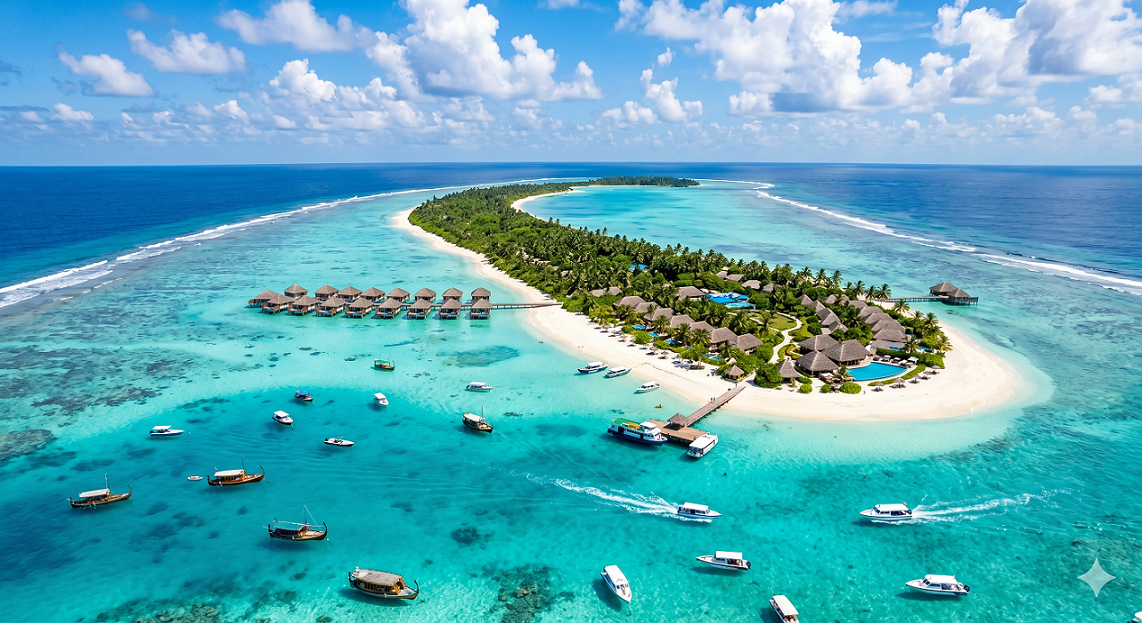
The tiny archipelago of Lakshadweep, scattered like emeralds across the deep blue of the Arabian Sea, feels less like a typical tourist spot and more like a world operating on its own gentle rhythm. Translated literally as “a hundred thousand islands” in Malayalam, this Union Territory of India consists of 36 stunning coral islands. Far removed from mainland chaos, it offers a visual feast of blindingly white sands, shallow turquoise lagoons, and an underwater world teeming with life.
How to Reach Lakshadweep from the Indian Mainland
Kochi (Cochin) in Kerala serves as the primary gateway to Lakshadweep. Every traveller, regardless of nationality, requires a mandatory Lakshadweep Entry Permit to visit. This can be obtained online through the official e-permit portal or arranged via authorized tour operators.
- By Air: The fastest and most convenient route is a direct flight from Kochi to Agatti Island (AGX), which is the only island in the archipelago with an airstrip. The flight takes approximately 1 hour and 30 minutes.
- By Sea: For a more slow-paced, nostalgic voyage, passenger ships (such as MV Kavaratti, MV Corals, and MV Lakshadweep Sea) operate from Kochi. The journey takes between 14 to 20 hours depending on the chosen destination. Accommodations on board range from air-conditioned seating to private multi-berth cabins.
Best Time to Visit
The absolute best window to explore the islands is between October and March. During these months, the weather remains pleasantly warm (ranging from 20°C to 30°C), skies stay exceptionally clear, and the seas are dead-calm. This creates optimal visibility for diving and water sports.
The shoulder season of April and May is hotter and more humid, yet it offers tranquil, uncrowded beaches.
Warning: Avoid planning a trip during the monsoon season (June to September). Heavy rainfall, strong winds, and rough seas make ferry transfers highly volatile, and nearly all water sports are suspended for safety.
Best Destinations in Lakshadweep
While Lakshadweep comprises dozens of islands, only a specific handful are open to tourists:
- Bangaram: Frequently called the “Jewel of Lakshadweep,” this uninhabited paradise is an isolated haven with a spectacular wrap-around lagoon. It is highly favored by couples and privacy seekers.
- Agatti: Your entry point to the archipelago. Agatti features stunning coral reefs right off its shore and offers a long, scenic road running through the slim strip of land.
- Kavaratti: The administrative capital of Lakshadweep. It blends a bit of local culture with nature, featuring beautiful historic mosques (like the Ujra Mosque) and a popular marine aquarium.
- Kadmat: A long, narrow sliver of land renowned for its expansive, shallow sandy beaches and excellent water sports infrastructure.
- Minicoy: Located at the southernmost tip, Minicoy has a culture distinctly influenced by the Maldives. It features a historic 19th-century British lighthouse and a thriving tuna industry.
Tour Packages
Pristine Coral Reefs and Aquatic Life
These emerald islands are defined by their pristine coral reefs, primarily composed of vibrant fringing reefs and expansive atolls that act as vital nurseries for the ocean’s most delicate inhabitants.
The clarity of the turquoise waters offers a window into a bustling underwater metropolis. Divers and snorkelers often encounter a kaleidoscopic array of life, from the intricate branches of Staghorn and Brain corals to the majestic presence of Green Sea Turtles and Hawksbill Turtles. The reefs are a sanctuary for over 600 species of marine fish, including the iconic Butterflyfish, Parrotfish, and the elusive Napoleon Wrasse.
Unlike many global destinations, Lakshadweep’s remote nature has preserved its ecological integrity. This fragile ecosystem remains one of the few places on Earth where the symbiotic harmony between coral and aquatic life is still visible in its most raw, breathtaking form—a true testament to the silent beauty of the deep.
Best Place for Scuba Diving
Agatti Island and Kavaratti Island are the top choices for scuba diving. Kavaratti houses the well-known Dolphin Dive Centre, catering beautifully to both beginners and advanced divers. Popular dive sites like Bangaram’s drop-offs and Agatti’s coral gardens feature remarkable visibility. While exploring, keep an eye out for sea turtles, manta rays, reef sharks, and dense schools of colorful parrotfish and surgeonfish.
Best Place for Snorkelling & Water Activities
Kalpeni and Kadmat boast exceptionally vast, shallow, and calm lagoons, making them safer, stress-free havens for snorkelling beginners and families. Beyond snorkelling, Kadmat is a prime hub for high-energy water activities, including kayaking, windsurfing, glass-bottom boat rides, and parasailing.
Best Place for Bioluminescence
For a surreal night experience, Bangaram Island and its neighbor Thinnakara Island are famous for natural bioluminescence. During specific phases of the year, microscopic phytoplankton emit a glowing neon-blue light when agitated by the waves, making the shoreline look like a mirror reflection of a starlit night sky.
Accommodation options
Because the islands maintain strict ecological regulations, mass-market commercial hotel chains are non-existent. Instead, the focus is on eco-resorts and cozy homestays.
- Premium Resorts: The Bangaram Island Resort and Coral Pearl Resort (Agatti)—both managed under IHCL SeleQtions—offer high-end beachside cottages, premium hospitality, and private lagoon access. Praveg Atoll’s Thinnakara also provides spectacular luxury tented stays right on the beach.
- Mid-Range & Budget Options: Government-run Kadmat Beach Resort offers comfortable beachfront rooms. For budget-conscious travelers, Agatti hosts several approved local homestays (like Castaway Inn and Coral Paradise Beach Resort) that offer a direct look into local island life.
Best Hotels / Resorts
Praveg Atolls Thinnakara Lakshadweep
Coral Pearl, Agatti Island Lakshadweep by IHCL SeleQtions
Sea Shells Beach Resort Agatti Lakshadweep
Bangaram Island Resort by Ihcl Seleqtions, Agatti Island Lakshadweep
Zephyr Beach Stay Inn, Agatti, Lakshadweep
Internal Transport Within the Archipelago
Moving between different islands relies entirely on high-speed passenger ferries or speedboats operated by the administration during the fair season. Because schedules depend heavily on weather conditions, a bit of itinerary flexibility is always wise. In emergencies or during the monsoons, helicopter transfers are utilized.
Once you land on an individual island, the best way to get around is by renting a bicycle, hiring a local auto-rickshaw, or simply walking, as most islands are tiny enough to traverse on foot within an hour.
Culinary Specialties of Lakshadweep
The food in Lakshadweep is heavily influenced by the culinary traditions of Kerala, with a distinct emphasis on fresh seafood and coconut.
| Specialty Dish | Description |
| Mus Kavaab | A spicy, flavorful dish made by marinating fresh chunks of tuna in a paste of coconut, red chillies, coriander, and local spices, then slow-cooked to perfection. |
| Maasu Podi | Made from dried, shredded tuna tossed with grated coconut, onions, and green chillies. It is typically served as a dry side dish alongside rice. |
| Kilanje | A paper-thin, crepe-like sweet dessert made from rice flour and eggs, soaked in a rich, sweet sauce of coconut milk and jaggery. |
Is It Cost-Effective?
A trip to Lakshadweep is generally moderate to expensive, rather than cheap.
- Travel Costs: Flights from Kochi to Agatti can be pricey due to limited daily seat availability.
- Stay & Food: Premium eco-resorts run on the higher side (often ranging from ₹15,000 to ₹35,000+ per night including meals). However, opting for local homestays on Agatti or Kavaratti drops lodging costs significantly to a more reasonable ₹4,000–₹8,000 per night.
- Value for Money: Given that entry is strictly regulated and crowds are kept to an absolute minimum, the cost is well justified. You are paying for pristine exclusivity, crowd-free beaches, and a highly preserved marine environment that is becoming increasingly rare elsewhere.