
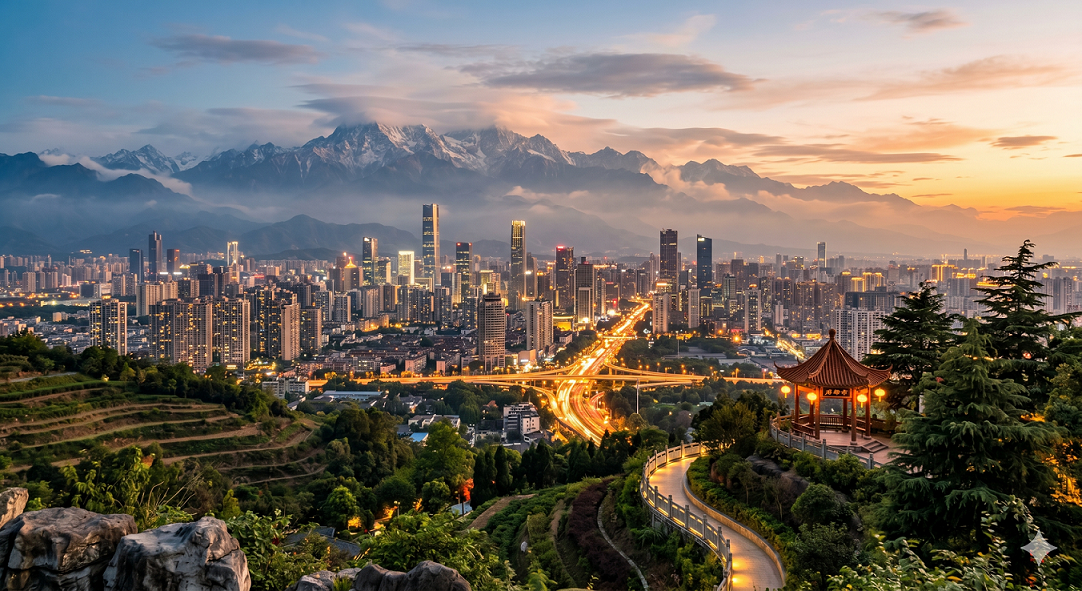
Ultimate Chengdu Travel Guide: Best Destinations to Visit
Chengdu, the vibrant capital of China’s Sichuan province, is a destination where ancient heritage seamlessly blends with trendy metropolitan life. Known globally as the hometown of giant pandas, it is also a gateway to majestic snow-capped mountains, spiritual landmarks, and legendary culinary experiences.
Whether you want to explore rugged alpine peaks or enjoy slow-paced teahouse culture, this curated guide highlights the best destinations to visit in and around Chengdu.
Dujiangyan Panda Valley Chengdu
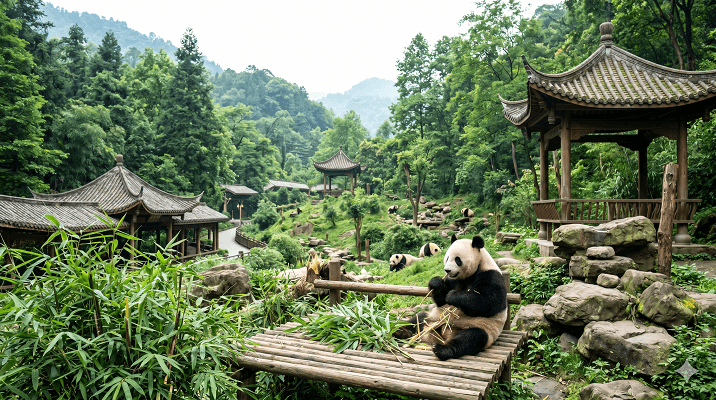
While Chengdu offers multiple options to see pandas, the Dujiangyan Panda Valley (Chengdu Field Research Center for Giant Panda Breeding) stands out for travelers seeking a quieter, more natural encounter. Located roughly 60 kilometers outside downtown Chengdu, this facility focuses heavily on ecological conservation and the “re-wilding” of captive-born giant pandas.
Unlike larger, more crowded urban centers, Panda Valley offers an immersive walk through rolling bamboo forests and peaceful streams. Visitors can watch adolescent pandas learning essential climbing and foraging skills in semi-wild environments. The facility also features a highly popular walk-through Red Panda Forest, where these small, rusty-furred animals roam freely across wooden pathways and low tree branches right next to you.
- Tip: Arrive early between 8:30 AM and 10:00 AM. This is feeding time when the pandas are most active before their afternoon naps.
Leshan Giant Buddha (A Marvel of Ancient Engineering)
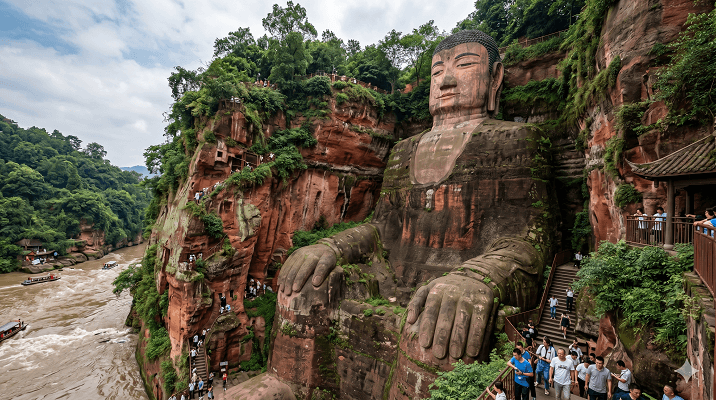
Carved directly into the red sandstone cliff face of Mount Lingyun, the Leshan Giant Buddha is a breathtaking UNESCO World Heritage site located about 140 kilometers south of Chengdu. Standing at 71 meters tall, this massive stone statue represents Maitreya Buddha and sits at the confluence of three major rivers: the Min, Qingyi, and Dadu.
Commissioned by a Buddhist monk named Hai Tong in the year 713 AD, the statue was constructed to calm the turbulent river waters that plagued local shipping vessels. Today, visitors can experience this architectural masterpiece in two distinct ways:
- The Cliff Stairs: Walk down the narrow, steep switchback staircases cut directly into the rock alongside the Buddha. Standing at the base allows you to see his feet, each large enough to fit up to 100 people.
- The Sightseeing Cruise: Take a river boat to view the entire figure from a distance, capturing the scale of the monument in its entirety.
Traveling from Chengdu is highly efficient, with high-speed bullet trains from Chengdu East Railway Station reaching Leshan in just 45 to 55 minutes.
Mount Siguniang and Maobiliang (The Alps of the East)
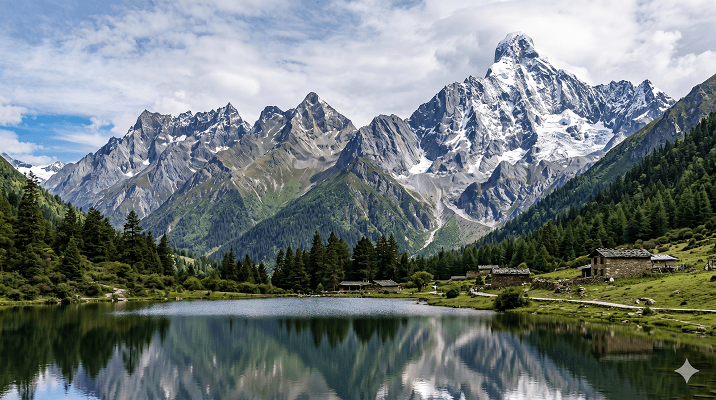
For adventure travelers and landscape photographers, Mount Siguniang (“Four Girls Mountain”) offers some of the most dramatic alpine vistas in Western China. Located about 200 kilometers from Chengdu in Aba Prefecture, this majestic mountain range consists of four adjacent peaks, with the highest, Yaomei Feng (the youngest sister), soaring to 6,250 meters.
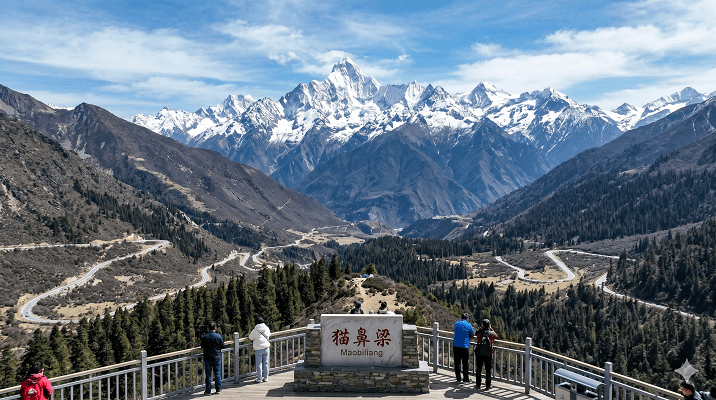
Before entering the main park valleys, stopping at Maobiliang (Cat’s Nose Ridge) is absolutely essential. Serving as the ultimate panoramic viewing platform along the highway, Maobiliang provides an unobstructed, postcard-perfect view of all four peaks standing side-by-side.
On a clear day, watching the golden sunlight hit the jagged, snow-dusted ridges at sunrise or sunset is an unforgettable experience. The surrounding area features pristine valleys like Shuangqiaogou, which are fully equipped with sightseeing boardwalks, making the rugged alpine beauty highly accessible to travelers of all fitness levels.
Bipenggou Fairy Tale World Chengdu
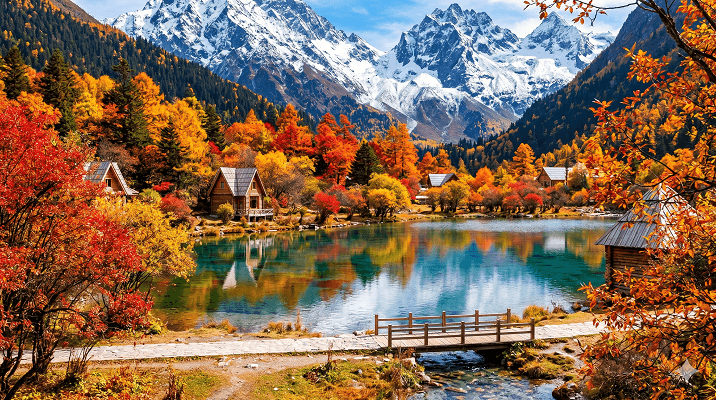
Affectionately nicknamed the “Little Switzerland of Western Sichuan,” Bipenggou Scenic Area is a pristine ecological valley nestled in the Qionglai Mountains, roughly 220 kilometers northwest of Chengdu. This destination earns its reputation as a “Fairy Tale World” due to its remarkably diverse natural features, combining ancient glaciers, mirror-like alpine lakes, wild forests, and dramatic waterfalls.
Bipenggou transforms brilliantly across all four seasons:
- Spring & Summer: The valley floor carpeted in vibrant azaleas, offering a cool, refreshing escape from the summer heat.
- Autumn (September to November): The peak season, when the leaves of the birch, larch, and maple trees turn brilliant shades of fiery crimson and golden yellow.
- Winter: A snow-covered wonderland featuring natural ski slopes and hot springs.
With a well-developed internal transit system of park shuttle buses and electric golf carts, visitors can easily travel up to high-altitude landmarks like Swallow Rock, which sits at an elevation of nearly 3,900 meters above sea level.
Chengdu Happy Valley (High-Energy Modern Thrills)
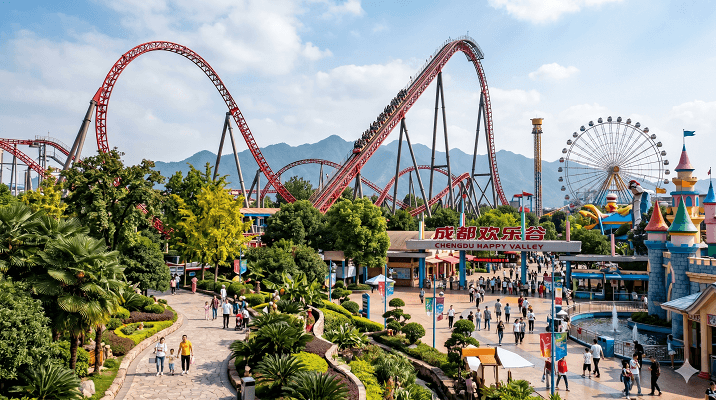
If you want a change of pace from historic landmarks and mountain scenery, Chengdu Happy Valley delivers a massive dose of modern entertainment. Situated right within the Jinniu District of Chengdu, this sprawling, state-of-the-art amusement park covers a vast area divided into heavily themed zones, including Silk Road Dream, Magic Castle, and Hurricane Bay.
The park caters to both thrill-seekers and families, featuring extreme roller coasters, drop towers, and sprawling water rides alongside interactive children’s play areas. Throughout the day, the park comes alive with elaborate floats, live stunt shows, and musical performances. It provides a fun, high-energy counterweight to the historic and natural sightseeing found elsewhere across Sichuan.
Hong Ding Yan Hot Pot Chengdu
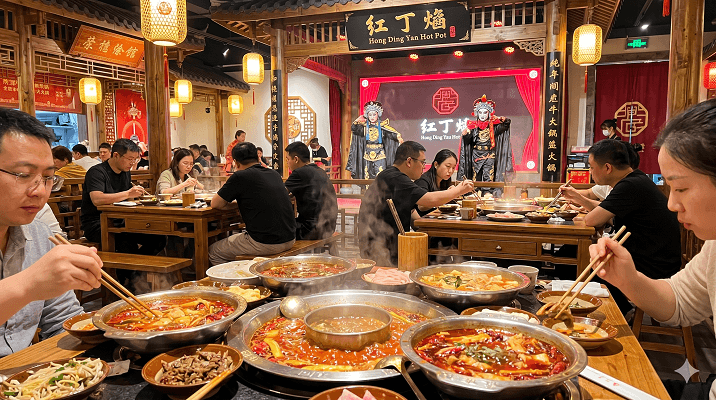
No visit to Chengdu is complete without indulging in Sichuan hot pot, and Hong Ding Yan offers a premium, immersive dining experience. Guests gather around a simmering metal pot filled with a rich, aromatic broth heavily spiced with Sichuan peppercorns (hua jiao) and red chilis.
The signature numbing-and-spicy sensation (ma la) defines the culinary heritage of the region. Diners cook thinly sliced premium beef, fresh mushrooms, lotus root, and local delicacies right at the table, balancing the heat with a cooling dipping bowl of sesame oil and garlic.
Sichuan Opera House (Shufeng Yayun)
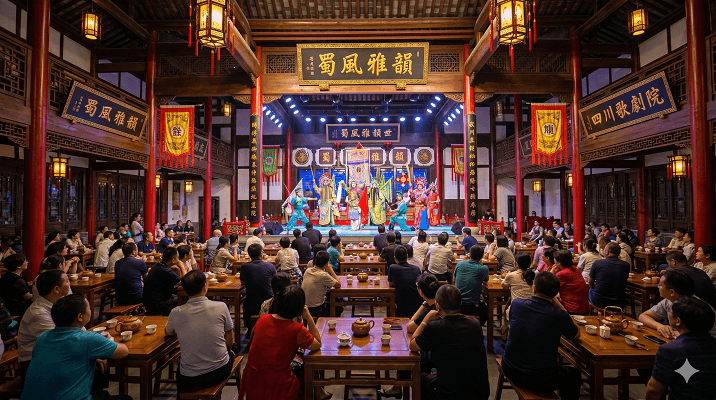
After dinner, spend your evening at the historic Shufeng Yayun Sichuan Opera House, located inside Chengdu Culture Park. Operating in a traditional, open-air courtyard setting, this show delivers a comprehensive showcase of classical Sichuan folk arts.
The performance features acrobats, fire-breathers, comedic shadow puppetry, and traditional instrumentalists. The undeniable highlight of the evening is Bian Lian (Face Changing), where performers seamlessly change their brightly colored masks in a fraction of a second with a flick of a fan or a sharp turn of the head, leaving the audience completely spellbound.
Summary Table: Planning Your Chengdu Itinerary
| Destination | Distance from Downtown | Highlights | Best Time to Visit |
| Dujiangyan Panda Valley | ~60 km | Less crowded giant panda viewing, walk-through Red Panda Forest | Year-round (Morning) |
| Leshan Giant Buddha | ~140 km | 71-meter cliff-carved statue, scenic river cruises | March to November |
| Mount Siguniang & Maobiliang | ~200 km | Jagged alpine peaks, panoramic mountain lookouts | May to November |
| Bipenggou Fairy Tale World | ~220 km | High-altitude glaciers, lakes, autumn foliage, winter skiing | September to November (Autumn colors) |
| Chengdu Happy Valley | In-city (Jinniu) | Roller coasters, themed zones, live entertainment | Spring and Autumn |
| Shufeng Yayun Opera House | In-city (Culture Park) | Face-changing (Bian Lian), traditional folk arts, tea culture | Evening (Year-round) |